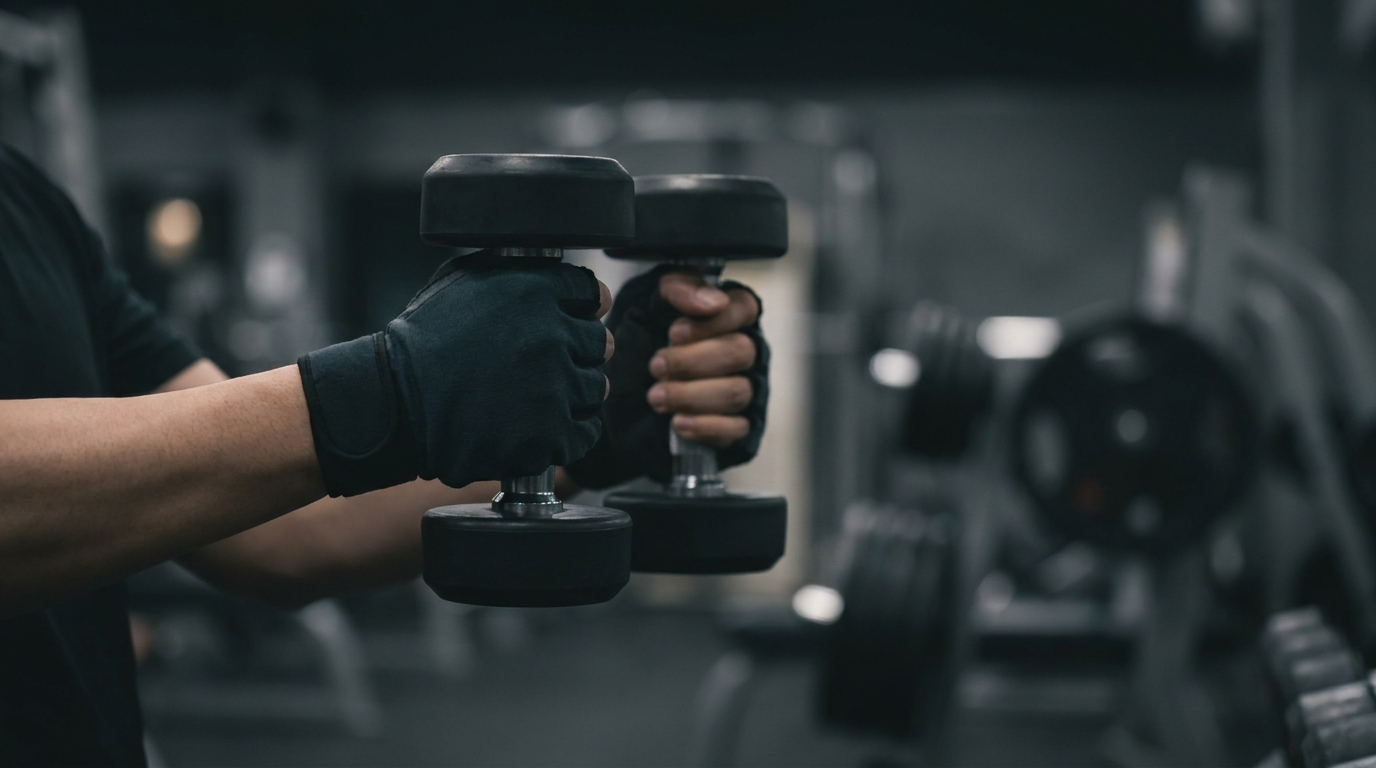
Carpal Tunnel and Lifting Weights: Can You Still Work Out?
Short answer: yes, you can. But you'll need to modify some exercises, eliminate a few, and — most importantly — manage your total daily wrist strain so that gym time doesn't push you over the edge.
Lifting weights with carpal tunnel isn't just about which exercises to avoid. It's about understanding that your wrists have a daily strain budget, and every activity draws from it — keyboard work, phone use, cooking, driving, and yes, weightlifting. If you use up your budget at the office, your wrists have nothing left for the gym.
How Weightlifting Affects Carpal Tunnel
The carpal tunnel sits at the base of your wrist, and it's affected by two types of gym-related stress:
Compressive loading. Exercises that require a bent wrist under load (push-ups, front squats, cleans) directly compress the carpal tunnel from the outside. This adds to the internal compression from swollen tendons.
Grip strain. Heavy gripping activates the flexor tendons that pass through the carpal tunnel. High-volume or high-weight gripping can increase tendon inflammation — the same mechanism that computer use triggers.
The distinction that matters: Not all exercises that involve your hands are equally problematic. Exercises with wrist extension under load are worse than exercises with a neutral wrist. Sustained grip is worse than brief grip. And exercises that combine both — like a heavy barbell front squat — are the most provocative.
Exercises to Modify or Avoid
Avoid or Significantly Modify
Push-ups on flat hands. The combination of wrist extension, body weight compression, and sustained loading is one of the worst exercises for carpal tunnel. If you want to keep push-ups, use push-up handles or hex dumbbells that allow a neutral wrist position.
Barbell front squats. The front rack position requires extreme wrist extension. Switch to a cross-arm grip, use straps to hold the bar, or substitute goblet squats.
Cleans and snatches. The catch position involves rapid forced wrist extension under heavy load. These are high-risk for carpal tunnel flare-ups.
Wrist curls (heavy). Seems counterintuitive — this is a "wrist exercise" — but heavy loaded wrist curls increase flexor tendon inflammation. If you want to strengthen your forearms, use light weight and high reps, or substitute grip trainers.
Heavy barbell bench press. The wrist extension required to support a heavy bar can be problematic. Using wrist wraps helps. Dumbbells allow a more neutral grip angle.
Modify with Neutral Grip
Pull-ups. Switch from a straight bar to neutral-grip handles (palms facing each other). This eliminates wrist deviation and reduces grip strain.
Rows. Dumbbell rows with a neutral grip are better than barbell rows for carpal tunnel. The wrist stays neutral throughout the movement.
Pressing movements. Dumbbell presses allow your wrist to find its natural angle. Avoid wide-grip barbell pressing, which forces wrist extension.
Deadlifts. Conventional grip is fine if your grip strength allows it. If you need to grip harder to hold the bar, use straps — the goal is training your posterior chain, not your grip endurance.
Generally Safe
Machine exercises with handles. Cable machines, hammer strength machines, and most pin-loaded machines allow a neutral or self-selected grip angle. These are your safest option during flare-ups.
Lower body exercises. Squats (with appropriate bar position), leg press, lunges, leg curls, leg extensions, hip thrusts — these train major muscle groups without wrist involvement.
Bodyweight core work. Planks on forearms (not hands), crunches, hanging leg raises (with straps if grip is an issue), dead bugs.
Resistance bands. Band exercises often involve lighter grip forces than free weights and allow more natural wrist angles.
The Total Strain Budget Approach
Here's the insight that changed my ability to keep lifting: my gym time wasn't the primary driver of my carpal tunnel. My 8-hour work day was.
If you spend 8 hours doing 50,000+ keyboard and mouse interactions and then go to the gym, your wrists arrive at the gym already near their daily limit. Even light gripping can push them over the edge. That's why carpal tunnel often flares up after gym sessions even though the gym wasn't the primary cause.
The solution isn't to stop going to the gym. It's to arrive at the gym with more budget remaining.
When I started using voice control for the navigational portion of my computer work — app switching, scrolling, clicking, window management, browser navigation — my daily keyboard and mouse interactions dropped by roughly half. Neo by Jam handles these interactions through voice commands and eye tracking, processing commands locally in under 100 milliseconds.
The result: I arrive at the gym with wrists that haven't been ground down by eight hours of repetitive motion. I can grip a barbell without triggering a flare-up. The exercises that used to be risky became manageable, and the exercises that were manageable became comfortable.
The Lifting Protocol for Carpal Tunnel
Pre-Workout (5 Minutes)
Wrist circles. 10 slow circles in each direction.
Nerve glides. 5 cycles of the median nerve glide sequence.
Progressive grip warm-up. Start with an empty bar or very light dumbbells. Grip gently, progressively increase grip force over 2-3 warm-up sets.
During the Workout
Neutral grip wherever possible. Dumbbells over barbells. Neutral-grip handles over straight bars.
Wrist wraps for heavy pressing. Wraps stabilize the wrist joint and reduce the compensatory grip tightening that happens when the wrist feels unstable.
Straps for heavy pulling. If your grip gives out before your target muscles, use lifting straps. You're training your back or hamstrings, not your grip endurance. Straps remove grip as a limiting factor and reduce unnecessary tendon loading.
Lighter grip, more reps. During carpal tunnel flare-ups, reduce weight and increase reps. The training stimulus for muscle growth comes from volume and proximity to failure — you can achieve both with lighter weights and more repetitions while reducing per-rep wrist strain.
Post-Workout (3 Minutes)
Wrist flexor stretch. 30 seconds each arm.
Wrist extensor stretch. 30 seconds each arm.
Ice if needed. If your wrists feel inflamed after lifting, 15 minutes of ice can reduce acute swelling.
Training Split Considerations
If your carpal tunnel is active, consider structuring your weekly training to avoid back-to-back wrist-heavy days:
Monday: Lower body (minimal wrist involvement) Tuesday: Upper body push (dumbbells, neutral grip, wrist wraps) Wednesday: Rest or cardio Thursday: Lower body Friday: Upper body pull (straps for heavy pulls, neutral-grip attachments) Weekend: Active recovery, stretching, low-intensity activity
This structure gives your wrists at least one full day of recovery between upper body sessions.
When to Take a Break
Temporary training breaks are appropriate if:
- Lifting causes numbness or tingling that lasts more than 30 minutes post-workout
- You notice decreased grip strength over several sessions
- Your nighttime symptoms worsen after gym days
- A specific movement causes sharp pain (not muscle soreness) in the wrist
A break doesn't mean quitting. It means removing the aggravating stimulus while you implement other interventions (splinting, exercises, strain reduction at work) to bring the baseline inflammation down. Most people can return to modified lifting within 2-4 weeks.
Carpal tunnel doesn't have to end your training. It requires smarter exercise selection, better daily strain management, and the recognition that your wrists don't distinguish between work strain and gym strain. Reduce the work strain, protect the gym strain.
Lifting is important to me — and it was the fear of losing it that motivated me to find a real solution for my carpal tunnel. Reducing my work-hour wrist strain with Neo's voice control freed up enough daily strain budget to keep training with modifications. Try Neo free.